What Zebra Shades Cost in Indianapolis and Where Money Goes
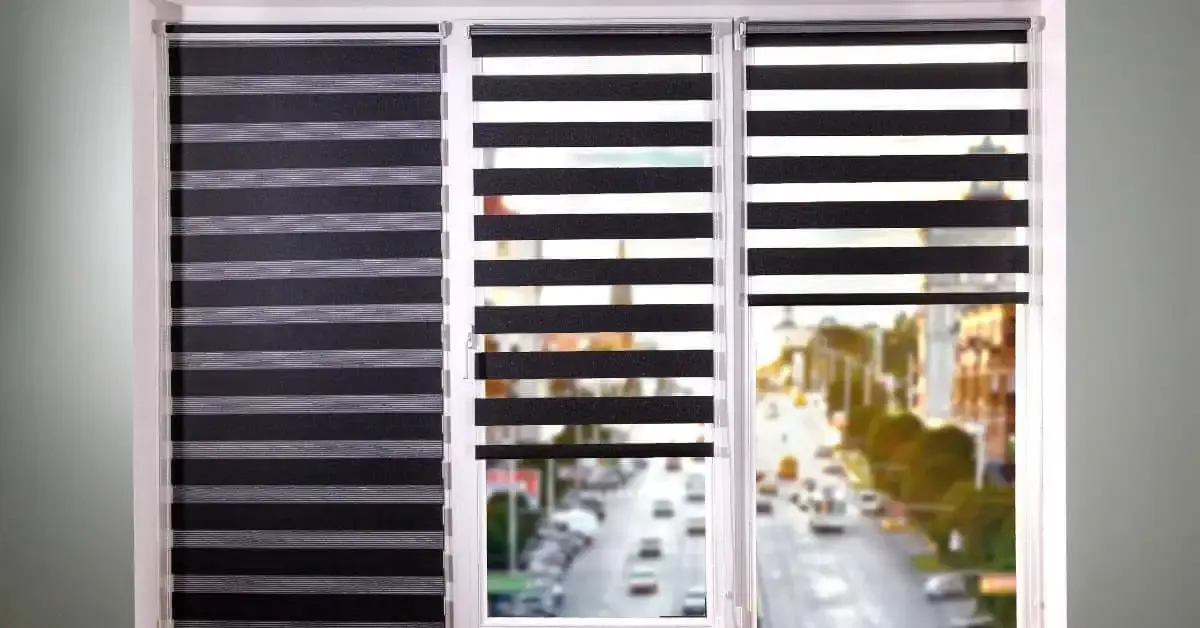
Zebra shade quotes confuse people because the product looks simple. One fabric, one tube, one chain. Then two companies price the same window hundreds of dollars apart and there is no obvious reason why. The reason is real, and it sits in the parts nobody photographs: the tube, the clutch, the way the roll gets covered, and the lift. Here is what your money is buying in an Indianapolis house, and where it is worth spending more.
Why two zebra shades can be hundreds of dollars apart
Two shades that look identical in a photo can differ by a lot, and the difference is almost never the pattern on the fabric. It is the parts you cannot see from across the room.
- Fabric. A basic polyester banded cloth is cheap. A heavier woven, a wider band, a light blocking solid band or a textured sheer all cost more, and the better ones hold their shape after a few years of rolling up and down.
- Tube and clutch. A larger tube costs more and is what keeps a wide shade from sagging in the middle. A cheap clutch is the part that starts slipping in year two.
- Headrail treatment. An exposed roll is the base price. A wrapped valance costs a little more. A full cassette with a back and a bottom closure costs the most and hides the roll completely.
- Lift. A cord loop sits at the bottom of the price list. Cordless spring lift is a step up. Motorized is the real jump.
- Size. Price tracks size right up until it hits a break point, where the fabric has to come off a wider roll or the tube has to grow. That step is where quotes surprise people.
Costs people forget to ask about
- Batteries and chargers on motorized shades, on a yearly rhythm rather than a one time purchase.
- Dye lots. Order four now and two more next spring, and the second pair can come off a different run of fabric that reads slightly different in the same light. Order the whole room at once when the budget allows.
- Cord tensioners on any corded loop. Small part, real requirement, and it gets fastened to the wall or frame at install.
- Repairs to a torn sheer. The sheer band is the fragile piece. A pet or a vacuum head can open a seam, and replacing one band means replacing the fabric.
- Taking shades down and rehanging them when the room gets painted later.
Where the money is well spent
Spend on the cassette in a sight line
On a window you look at every day from a seated position, an exposed roll is the thing your eye keeps finding. A cassette earns its money there. On a laundry room window nobody sits in front of, it does not.
Spend on the right sheer, not the fanciest one
The sheer band decides how well you see out and how much glare survives. A darker sheer gives a sharper view out and better glare control. A pale sheer looks brighter inside the room and washes the view out into haze. That choice costs nothing extra and it matters more than any trim detail on the quote.
Spend on motorization where you cannot reach
A high window over a stair, a shade behind a deep sink, a bank of four across one wall you want moving together, a window blocked by a sofa: those are the ones worth motorizing. Battery motors run roughly $100 to $300 a window less than hardwired ones and install without opening a wall. The trade is batteries, which need a change or a recharge about once a year. Budget for that before you commit to eight of them.
Stock versus custom
Stock zebra shades from a home center run roughly $60 to $600 a window nationally. They come in set widths, you get whatever gap the set width leaves you, and for a rental or a garage window that is a perfectly reasonable buy.
Custom shades, measured in your home and installed, run roughly $250 to $2,600 a window nationally. What the difference buys is a shade cut to your opening's real numbers, a fabric selection that is not four colors on a shelf, and somebody who owns the outcome if it does not fit. On an out of square opening, custom is not a luxury purchase. It is the only version that will look right.
You will not find a whole house number in this article. What you would pay turns on your window count and your sizes, so any figure printed here would be wrong for your house in Indianapolis. Ask for a written quote with per window line items instead. That is the document that lets you compare two companies honestly.
Getting a quote you can actually compare
Bids around Indianapolis and IN communities arrive in wildly different formats, which is exactly how a confusing bid stays confusing. Ask every company for the same four items: the fabric name with its band size, the lift type, the mount type with the deduction they are applying, and the lead time in weeks. Custom fabrication normally runs two to five weeks, so a company promising installation next week is either selling you stock sizes or is about to miss the date.
Ask about coverage too. We are insured and insured, and any company sending people into your house should be able to say the same and back it up on paper. Ask who does the measure, and whether the person measuring is the person who eats the cost of a bad number.
Value on this product comes down to how long it keeps looking new. A clutch that slips in year two, or a sheer gone baggy and wavy, costs more than the money it saved at the register. In Indianapolis we get called out to plenty of both, usually on shades that were bought on price alone.
A zebra shade is a smart buy when you want daytime view with evening cover out of one fabric, and a poor buy when what you actually need is a dark bedroom. Sort out which one you have before you shop. Indianapolis Window Treatments measures in the home and checks every opening for square before anything gets ordered. Call (317) 854-7158 when you want real numbers for your own windows.
Frequently Asked Questions
Can zebra shades be made blackout?
No, and any company telling you otherwise is stretching the truth. A zebra shade works by alternating a solid band with a sheer band on the same loop of fabric. The sheer is sheer whatever position it lands in, so a closed zebra dims a room and hides the view without ever going dark. If you need a dark bedroom, use a blackout roller with side channels, or hang a lined drapery panel over the zebra and use it at night.
Can people see in through zebra shades at night?
Yes, in the open position. During the day, outside light is much stronger than inside light, so you see out and nobody sees in. After sunset that reverses. Interior lamps make the room the bright side, and anyone outside can see through the aligned sheer bands. Closed, the shade hides detail but still glows and shows movement as a soft shape. Plan on closing the bands at dusk, and layer a drape on any window where that is not enough.
How do I clean a zebra shade without damaging it?
Vacuum with a soft brush attachment on low suction, moving across the bands rather than up and down, since dust collects on the top edge of every horizontal band. For a spot, use a barely damp cloth with a drop of mild dish soap, blot rather than rub, then leave the shade fully down until it dries. Never soak the fabric or put it in a machine, and keep solvents and bleach well away from it. If a sheer starts pulling loose at a seam, stop and call before it runs.
Will two zebra shades on the same wall line up?
Only if you plan for it. The band positions depend on how far the fabric has unrolled, so two shades of different finished heights, or two stopped at slightly different points, will show bands that do not match across the wall. On a run of windows we specify matching finished heights where the openings allow it and set the shades together at install. It is a small detail that decides whether the wall looks intentional or slightly off.
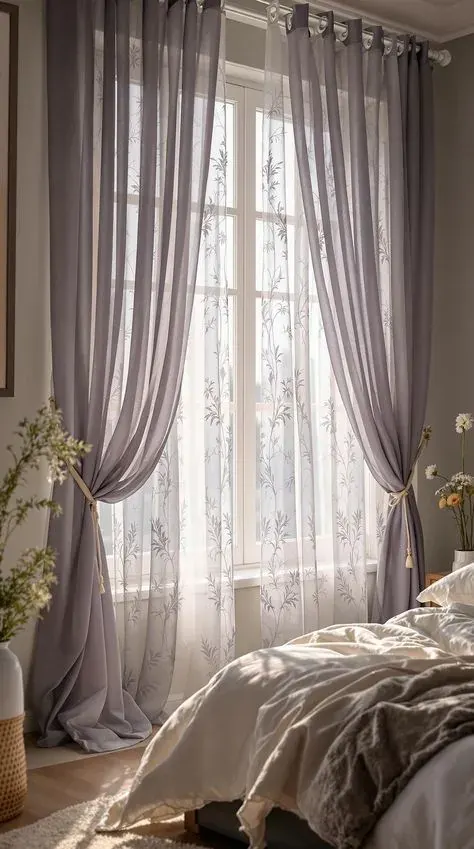 What Custom Drapery Costs in Indianapolis and Why It Varies
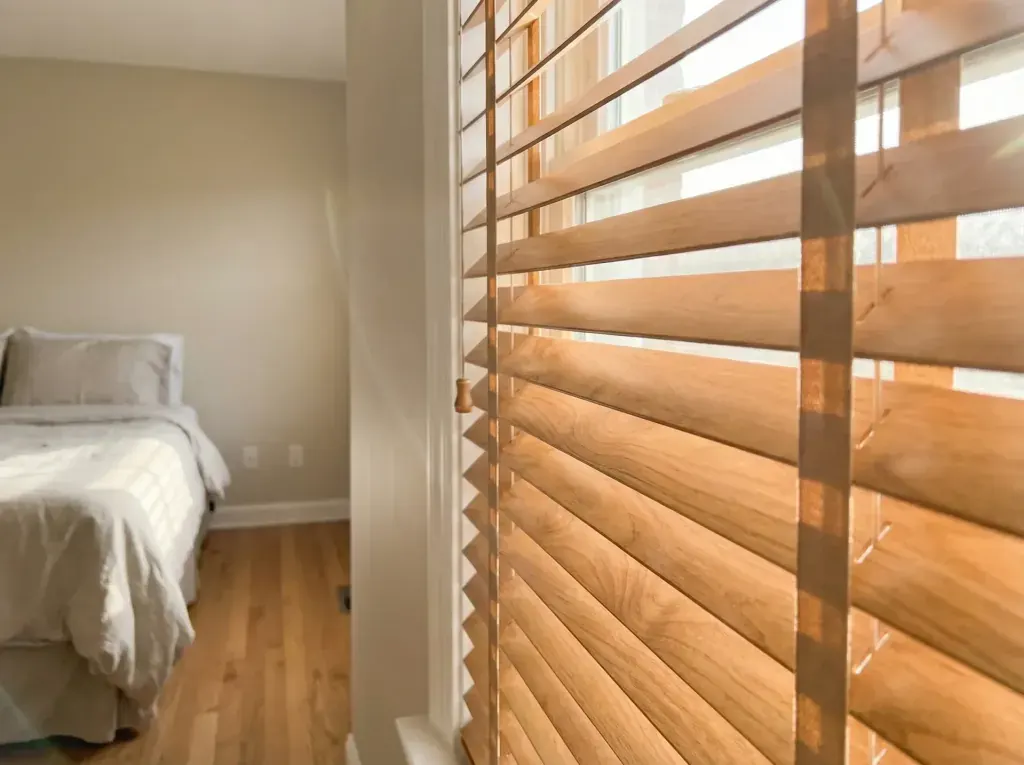 What a Finished Indianapolis Blind Install Should Look Like
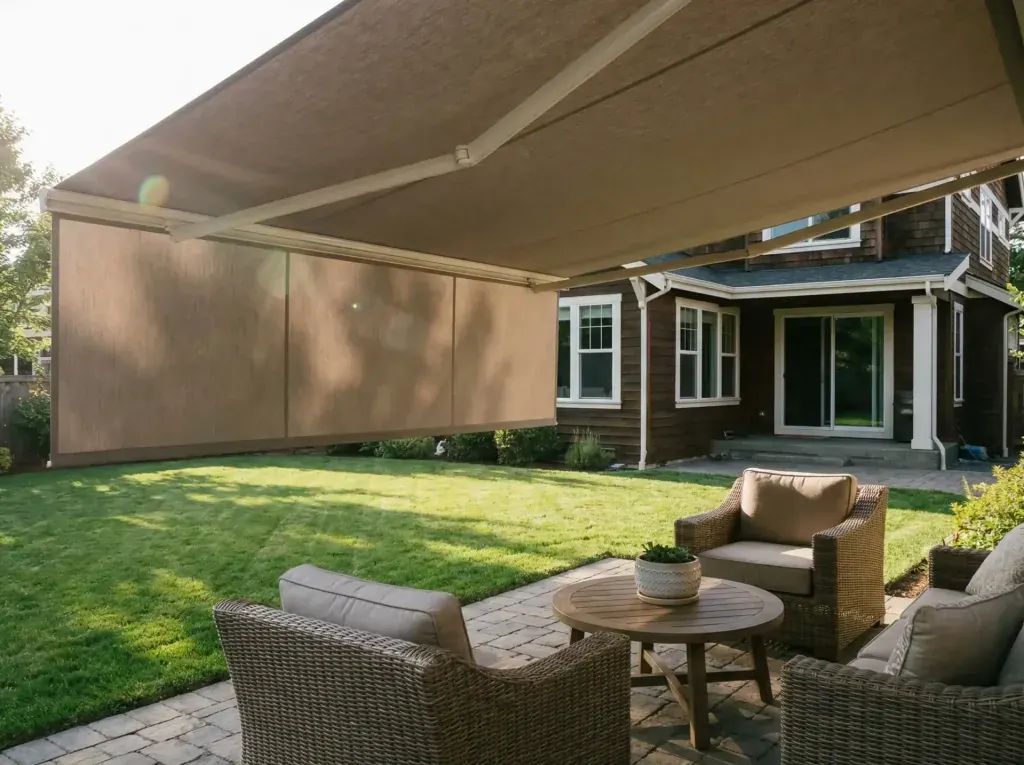 What a Retractable Awning Costs for an Indianapolis Patio