Exterior Solar Shades Across Indianapolis, IN
Stop the heat outside the glass, with the district checked
A short orientation before the detail: this product gets measured in your home, built to those sizes, and installed once it arrives. The answers here cover selection, operation, care and what the warranty does and doesn't include.
- Service: Exterior Solar Shades for Indianapolis homeowners
- Service area: Indianapolis, IN and surrounding areas We schedule measures promptly and we're honest about what comes after. Your product is manufactured to your dimensions, which takes weeks rather than days, and that applies to every custom line we sell.
- Insured and bonded
- Serving Indianapolis, IN since 2008
Expert Exterior Solar Shades for Indianapolis Homes
An exterior solar shade stops sunlight before it reaches the glass, and that is a materially different result from doing it afterward. An interior shade intercepts light that has already entered the room, so the energy is inside and the fabric can only diffuse and re radiate it. An exterior shade keeps it outside altogether. On a west facing Indianapolis porch, patio or tall rear opening in July, when the average high is 85.2F, the difference is obvious within minutes of it deploying.
Before anything else, there's a paperwork question that applies here and nowhere else in this market. An exterior shade fixed to the building is an exterior architectural feature. IC 36-7-11.1-9(a) says nobody may construct an exterior architectural structure or feature in a historic area until an application for a certificate of appropriateness has been filed. If your address is inside one of the 17 IHPC districts, that certificate is the first step, not an afterthought.
Outside those districts, National Register listing on its own restricts nothing. Indiana Landmarks states owners can modify their historic properties as they wish where they're using private funds. So a nationally listed house in Meridian-Kessler, Broad Ripple, Butler-Tarkington or Forest Hills can take an exterior shade with no approval, while an identical house inside an IHPC boundary cannot. We check the address before quoting.
Signs You Need Exterior Solar Shades
If you notice any of these in your Indianapolis home, it is worth booking a measure. None of it is urgent, and none of it fixes itself either.
A west patio or porch is unusable from mid afternoon in summer
Interior shades cut the glare but the room still runs hot
A tall rear elevation takes full sun with nothing shading it
An open lot leaves the glass exposed with no canopy
Cooling runs hardest on one side of the house all summer
A sunroom overheats whatever is fitted inside the glass
You want to keep the view and drop the temperature
Reflected light off water doubles the afternoon load
How Indianapolis Window Treatments Handles Exterior Solar Shades
Every job follows the same six-step process. Transparent, thorough, and done right the first time.
Check the district first
We look up the address against the IHPC district map before quoting, because an exterior shade in one of the 12 historic districts or 5 conservation districts needs a certificate of appropriateness under IC 36-7-11.1-9(a), and exemptions are set district by district in each adopted preservation plan. If you're in one, the commission is the first call. That application stays yours to file, and we'll tell you plainly that it's needed.
Assess exposure and wind
We look at which elevation it is, what shades it now, what will shade it in ten years, and how exposed the location is to wind. A high rear elevation with a long open fetch is a different engineering problem from a sheltered courtyard, and it changes the guide system, the fixing and whether a wind sensor is a recommendation or a requirement on a motorized shade.
Identify the fixing substrate
This decides more than the fabric does. On a pre-1940 Indianapolis house the wall is often solid masonry, which takes a proper masonry anchor rather than a frame fixing. On a 1960s house it may be a thin frame wall with little behind the finish. We establish what's actually there at every bracket position and specify anchors rated for the load including wind, not just the shade weight.
Choose fabric and openness
Exterior mesh is rated for outdoor ultraviolet rather than interior use, and the same openness logic applies: lower openness cuts more heat and more view, higher openness keeps the view. On an exterior shade the view is preserved better than people expect at a given openness, because the fabric is further from the eye. We show samples in position rather than on a card.
Specify guides and retention
An exterior shade needs to be held at its edges or it moves in wind. Side channels, cable guides or a zip track system each handle that differently, at different costs and with different looks. A shade without any retention will flap and eventually damage itself and its fixings. This is the item most often left out of a cheap quote and it's the one that determines the shade's life.
Install, set limits, test
Brackets into the substrate identified earlier, guides aligned so the fabric tracks true across full travel, and the shade run repeatedly to check it. On a motorized shade, upper and lower travel limits get set and re verified, and any wind or sun sensor is positioned and its threshold set with you present rather than left at the factory default.
Exterior Solar Shades in Indianapolis
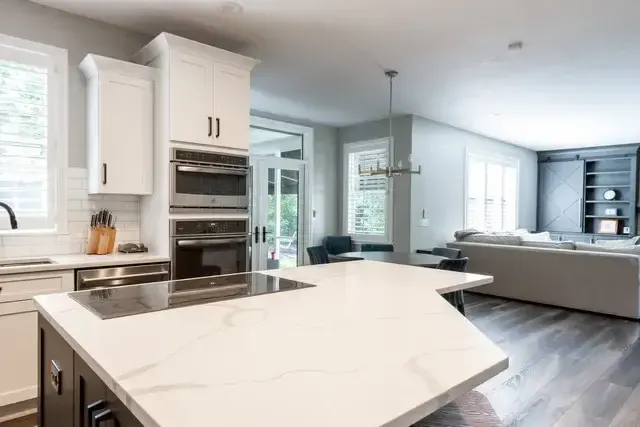
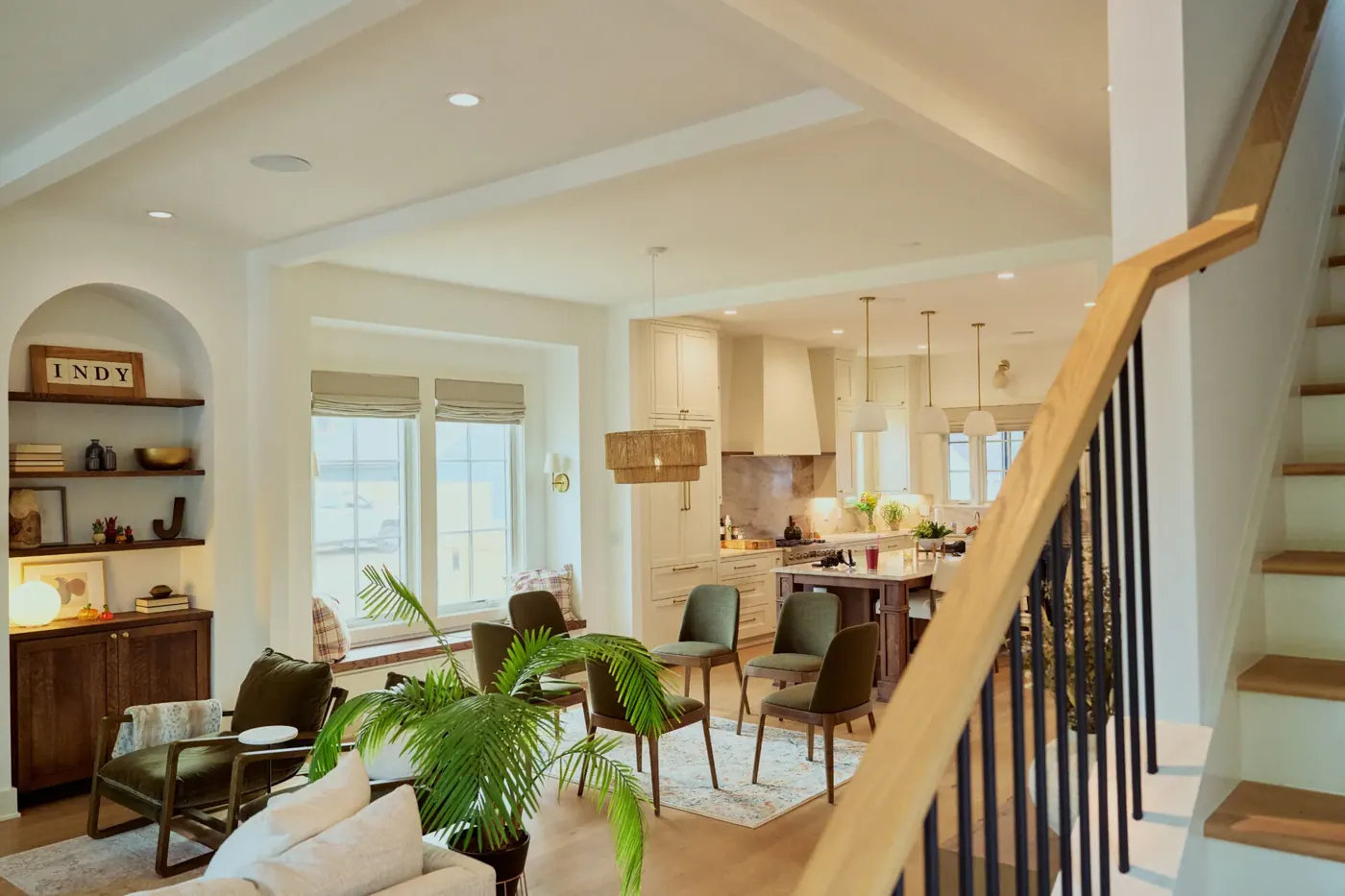
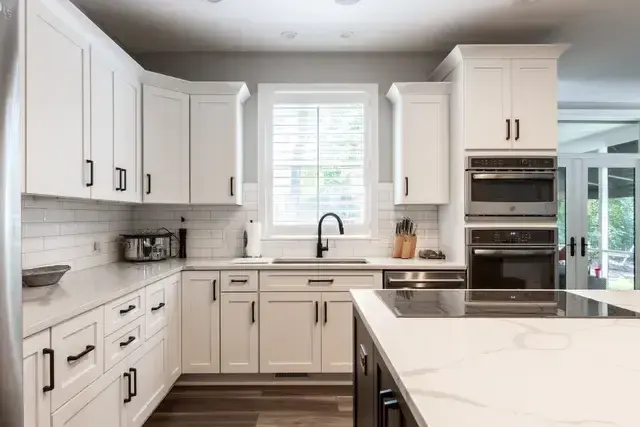
Photographs from real exterior solar shades jobs completed by our crew in Indianapolis and surrounding areas.
What Exterior Solar Shades Includes
Every Indianapolis job is documented item by item. Here is what the crew covers.
The sun walked on site at the hour the space actually gets hot, rather than whenever the appointment happens to be
Elevation identified per unit, since a west wall and a south wall want different openness and a different drop
Drop dimensioned from the mounting height down to where you want the mesh to land, at a rail or at the deck
Width run past the opening far enough that low afternoon sun can't come in around the side
Real structure located behind the finish, because an exterior shade anchors to framing or a beam and never to trim
Fastener schedule matched to the substrate, with brick veneer anchored through to the structure behind it
Openness factor chosen against view and heat, 1, 3, 5 or 10 percent, with samples held up outdoors in daylight
Mesh color decided knowing a dark mesh sees out better while a light mesh reflects more and glares more
Guide system specified as zip track or cable, since a free-hanging hembar is where an exterior shade fails
A hood or cassette specified so the rolled mesh isn't sitting out in weather all winter
Wind exposure assessed at that corner of the house, including which direction gusts actually arrive from
A wind sensor specified on any motorized unit that will be left down while nobody is home
Power route planned before the order, with any hardwiring done by a licensed electrical contractor
Battery operation weighed against an Indiana January, since cold shortens what a battery will deliver
Clearances checked for door swing, steps, a grill and anything else living under the shade
Every fastener into the wall sealed properly so nothing we add becomes a path for water
HOA rules on color, projection and visible hardware checked in writing before an order goes in
Travel limits set on install day, the unit cycled fully, and the retract routine shown to whoever will use it
What Exterior Solar Shades Cost in Indianapolis
There's no single published national figure for exterior screens, so the honest way to frame it is against two that do exist: motorized shades run about $300 to $1,500 per window installed, and retractable awnings run about $1,000 to $6,000 installed. Exterior solar shades sit between those, and they aren't a quote for anything in Indianapolis. Size drives it first, because these get large. Then the guide system: a shade hanging free with a weighted hembar is the cheap version, and a zip track that captures both edges costs more and is the one that survives a windy season. Motor, hood and the power run finish the number. Indianapolis Window Treatments prices after seeing the structure in Marion County, not from a picture.
How Exterior Solar Shades Differ by Product
Every product in this trade behaves differently in a room. Here is what that means for this work.
1 percent openness mesh: The tightest weave we hang outdoors. It cuts the most heat and glare and gives up the most view, and it makes sense on a west wall where afternoon sun is the entire complaint and looking out is secondary.
3 percent openness mesh: The workhorse specification for a patio or a porch. It holds back a serious amount of solar energy while keeping a usable view outward during daylight, and it's where most projects land once people see samples held up outside.
5 and 10 percent openness mesh: Looser weaves that protect the view first and the heat second. They belong where the outlook matters more than the temperature, or on an elevation that only takes hard sun for an hour or two a day.
Zip track guides: Tracks down both sides hold a welded edge on the mesh so the fabric can't leave the channel. It's the difference between a shade that shrugs off a gusty afternoon and one that flaps, stretches and eventually tears out at the hem.
Cable guides: Stainless cables tensioned top to bottom pass through the hembar and keep it from swinging. Cheaper than zip track and less capable in wind, and a reasonable middle answer on a sheltered porch that doesn't catch much weather.
Hood over the roller: An aluminum cover enclosing the rolled mesh when the shade is up. Out here it's not cosmetic. It keeps sun, rain and grit off the fabric roll and the mechanism through the months the shade isn't being used at all.
Manual gear operation: A crank and gearbox that runs the shade up and down by hand. It's dependable, it needs no power, and its weakness is human: a manual shade only retracts before a storm if somebody is home and thinking about it.
Motor with a wind sensor: The motor runs the shade on a remote and the sensor retracts it automatically once wind crosses a set threshold. On an exterior unit this isn't a luxury feature. It's the thing that saves the shade on the afternoon nobody is watching the sky.
Hardwired power supply: A dedicated circuit or a low-voltage feed run to the motor and installed by a licensed electrical contractor. Outdoors it beats batteries most of the time, since a hardwired motor doesn't care what the temperature did in January.
Post or beam mounting: Where there's no wall, the shade hangs from a beam or between posts on an open patio. The engineering question moves from the fastener to the post itself, and a post that wasn't set for lateral load will tell you about it in a gust.
See What Each Fabric Does To The Light
Pick a fabric below and the window updates. It's a drawing rather than a photograph, so read it as a rough guide to what each family does in a Indianapolis room, and to what it doesn't do.
Openness factor is a measured fabric spec, so you can compare it line to line. The category names are not measured. One maker's room darkening can behave like another maker's light filtering, which is why the sample books come to the measure and get opened in the room they're going in, at the hour that room has the problem.
Exterior Solar Shades FAQ
Questions we hear most often from Indianapolis homeowners considering exterior solar shades.
Exterior Solar Shades Across Indianapolis
We measure and install in every one of these Indianapolis neighborhoods. Each has its own page with the build eras, window conditions and mounting notes for that section.
- Exterior Solar Shades in Irvington
- Exterior Solar Shades in Fountain Square
- Exterior Solar Shades in Herron
- Exterior Solar Shades in Lockerbie Square
- Exterior Solar Shades in Chatham Arch
- Exterior Solar Shades in Old Northside
- Exterior Solar Shades in Woodruff Place
- Exterior Solar Shades in Meridian
- Exterior Solar Shades in Broad Ripple
- Exterior Solar Shades in Butler
- Exterior Solar Shades in Golden Hill
- Exterior Solar Shades in Forest Hills
- Exterior Solar Shades in SoBro
- Exterior Solar Shades in Warfleigh
- Exterior Solar Shades in Crows Nest
- Exterior Solar Shades in Williams Creek
- Exterior Solar Shades in Rocky Ripple
- Exterior Solar Shades in Traders Point
- Exterior Solar Shades in Geist
- Exterior Solar Shades in Bates
- Exterior Solar Shades in Fall Creek Place
- Exterior Solar Shades in Nora
- Exterior Solar Shades in Castleton
- Exterior Solar Shades in Glendale
- Exterior Solar Shades in Devonshire
- Exterior Solar Shades in Speedway
- Exterior Solar Shades in Meridian Hills
- Exterior Solar Shades in Cottage Home
- Exterior Solar Shades in Garfield Park
Other Window Treatment Services in Indianapolis
Indianapolis Window Treatments handles the full scope of window treatment work. Explore our other services below.
Schedule Your Free In-Home Measure in Indianapolis
Reach Us Directly
Our team prioritizes scheduled measures and service calls, and books in-home measures during business hours.
Ready to Book Your Measure?
Call us to set up an in-home measure, or to ask about a treatment that has stopped working. We will talk it through on the phone first.