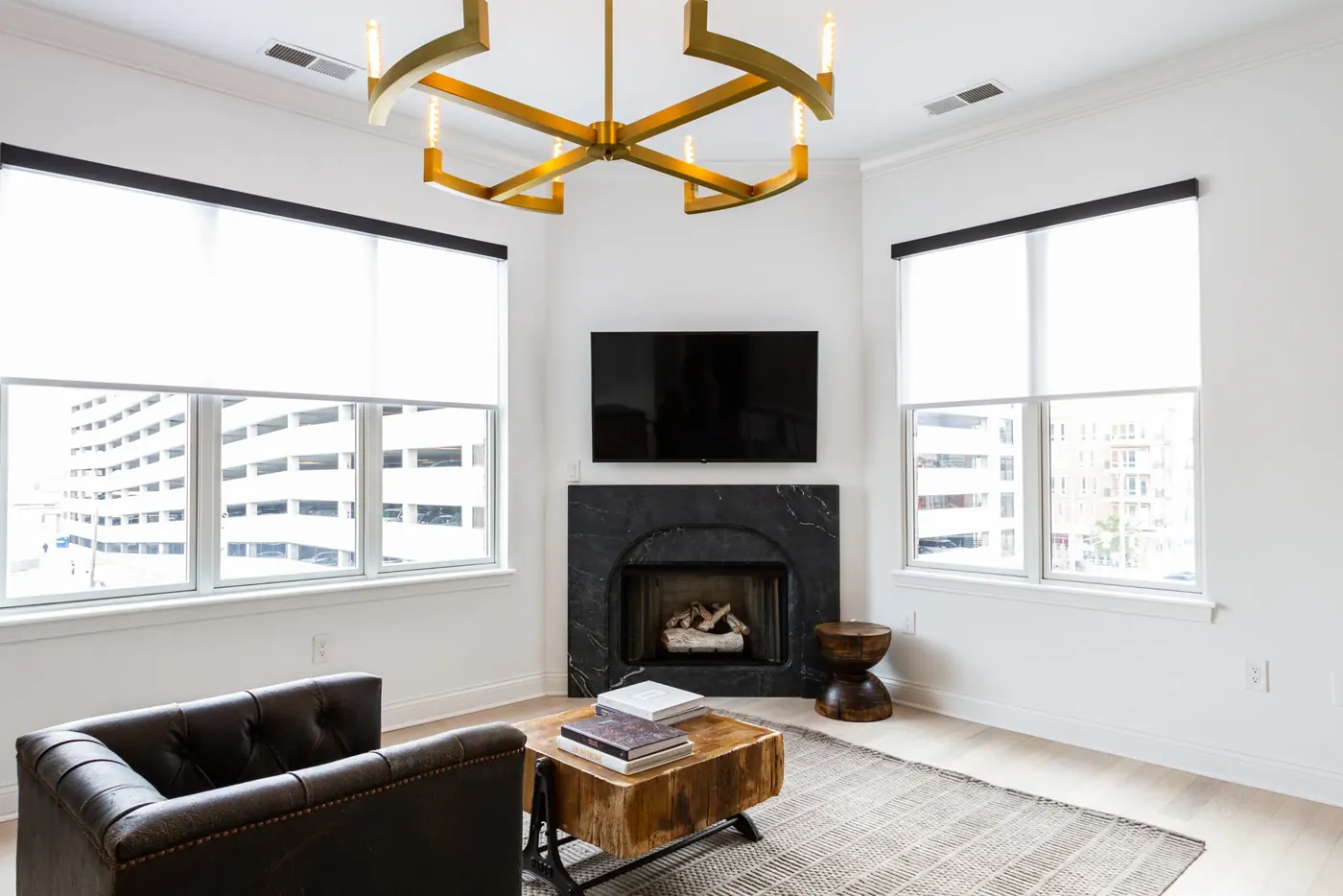
Indianapolis, IN Cellular Shades
The one product with measured energy data behind it
These questions cover how this product actually behaves in a house rather than in a photograph. Light, privacy, operation and durability all look different once something has been hanging through a full year.
- Service: Cellular Shades for Indianapolis homeowners
- Service area: Indianapolis, IN and surrounding areas Nothing in this trade is an urgent call-out, so here's the real timeline. Measures get scheduled promptly at a time that suits you. Custom fabrication then runs roughly two to five weeks. Installation is a morning or a day.
- Insured and bonded
- Serving Indianapolis, IN since 2008
Expert Cellular Shades for Indianapolis Homes
Cellular shades are the only interior product in this trade with real measured energy data behind them, and Indianapolis is the right climate to use it. Department of Energy and Oak Ridge National Laboratory testing measured cellular shades saving up to 20 percent of heating energy and up to 15 percent of total heating and cooling energy against a bare window, at an ORNL test house in Knoxville between December 2019 and May 2020, modeled across 15 climate zones. That's a test result, not a promise about your bill.
IECC Climate Zone 5A is what makes it relevant here rather than a nice statistic. This city has a real heating load and a real cooling load in the same house: January averages a 36.1F high and a 20.9F low across a three month cold season, and July averages 85.2F. A product that traps a layer of air at the glass earns its keep in both directions, which is not true of most of what we sell.
The place it matters most is the 63,149 Indianapolis housing units built before 1940. Those rooms have high heads, thin walls by modern standards, and glass that gets genuinely cold in January. A double cell shade on a north or west pre war window makes a difference you can feel standing next to it. What it can't do is fix a room that's cold for other reasons, and we'll say so rather than sell you shades for a problem they don't solve.
Signs You Need Cellular Shades
If you notice any of these in your Indianapolis home, it is worth booking a measure. None of it is urgent, and none of it fixes itself either.
A room feels cold sitting near the window in January
Condensation appears on the glass on cold mornings
A bedroom needs privacy but you don't want to lose daylight
Existing cell walls have delaminated at the cord holes
A cordless shade creeps down and won't hold its position
A street facing room needs privacy at the bottom and light at the top
You want one product that works in both seasons
A nursery needs a cordless lift and real darkness
How Indianapolis Window Treatments Handles Cellular Shades
Every job follows the same six-step process. Transparent, thorough, and done right the first time.
Single cell or double
We work out which rooms justify double cell rather than putting it everywhere. A north or west facing room in a pre-1940 house with a real winter complaint is the clear case. An interior room, a south room with good canopy, or a modern house with a tight envelope usually doesn't need it. Double cell costs more and stacks taller, so it's a choice rather than an upgrade.
Fabric opacity per room
Light filtering, room darkening and blackout cellular are three different fabrics. We pick per room rather than per house. A living room usually wants light filtering. A bedroom often wants room darkening. A nursery or a media room wants blackout, at which point we start the separate conversation about outside mounts and channels, because blackout fabric alone won't darken a room.
Decide top down bottom up
On a street facing pre war room this configuration is frequently the whole answer: drop the top rail to let daylight in high while the lower half stays closed for privacy. It adds a second operating system to every shade, so it costs more and there's more to go wrong. We recommend it where the room's geometry actually calls for it rather than across a whole house.
Measure and check depth
Three widths, three heights and a diagonal per opening, then mounting depth at the stop. A cellular headrail is shallower than most, which is why this product frequently fits inside a 1950s jamb where a roller cassette won't. On out of square openings the fabric is more forgiving than a rigid slat, but the light wedge still shows, so a bad diagonal still means an outside mount.
Specify the lift system
Cordless lift is the default and it's what we'd put in any room a child uses. Where a shade is above reach, motorization is the honest answer rather than a long wand. Cordless spring systems have a known failure mode: the constant force spring is sized to the fabric weight and drifts as the fabric relaxes, which shows as a shade that creeps. It's the most common warranty item in this trade.
Install and warn on condensation
Brackets in, shade run through full travel, hembar checked level to the sill. Then we tell you where condensation risk sits: winter moisture on cold glass wicks into cellular pockets behind an inside mounted shade, worst in bathrooms and behind blackout linings, and shows as dark spotting along the bottom rail. On a high risk opening we'd have recommended an outside mount at step four.
Cellular Shades in Indianapolis
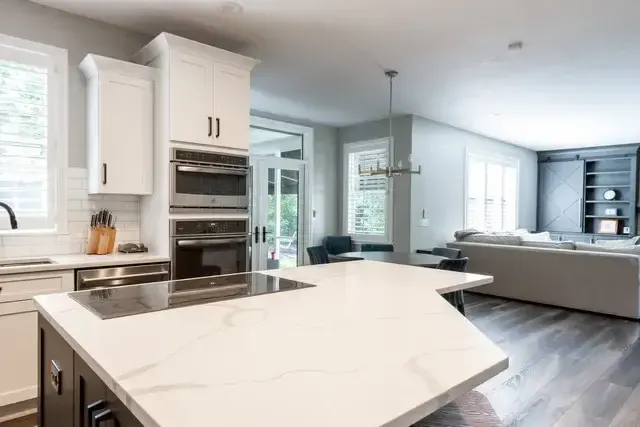
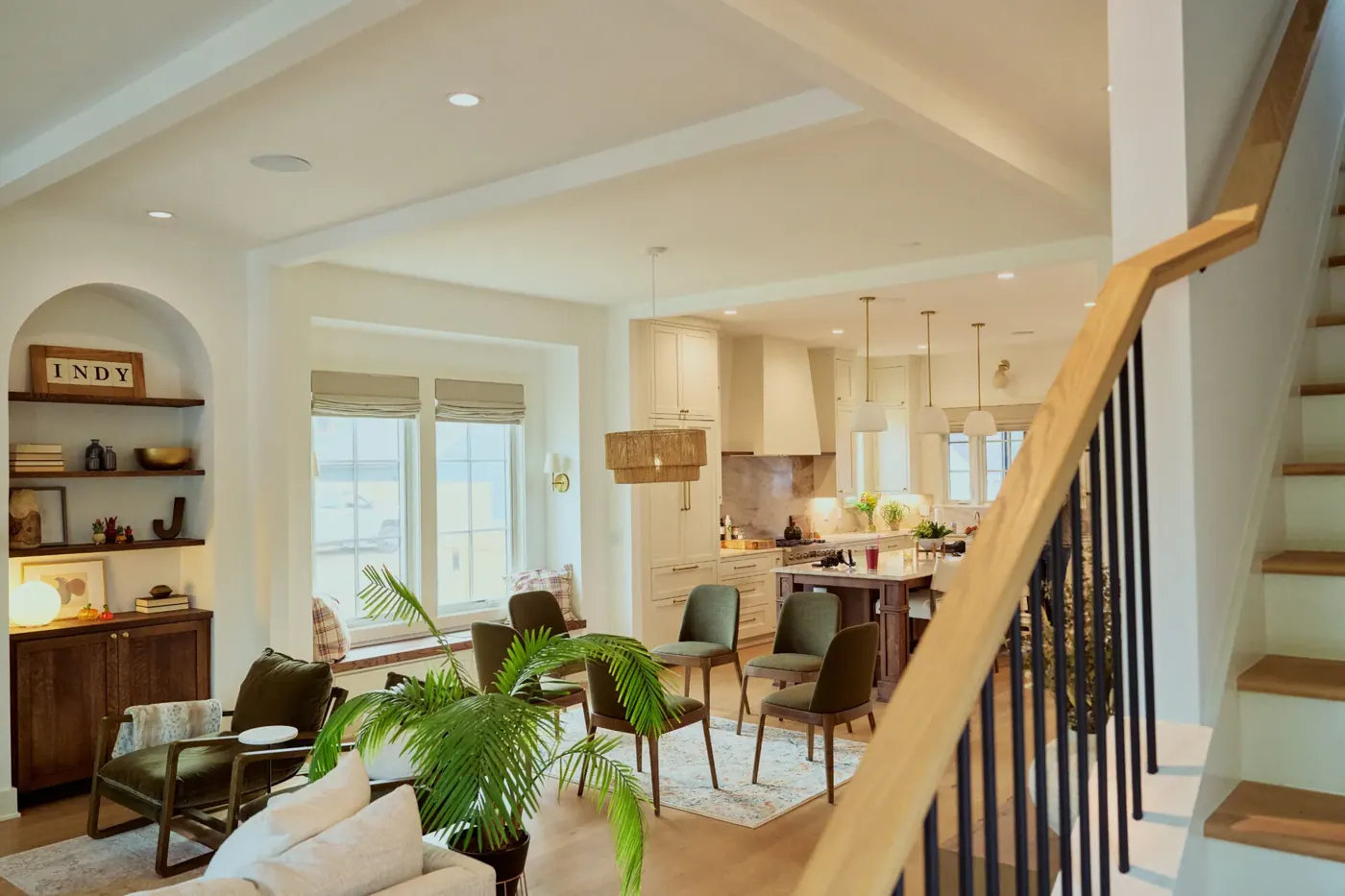
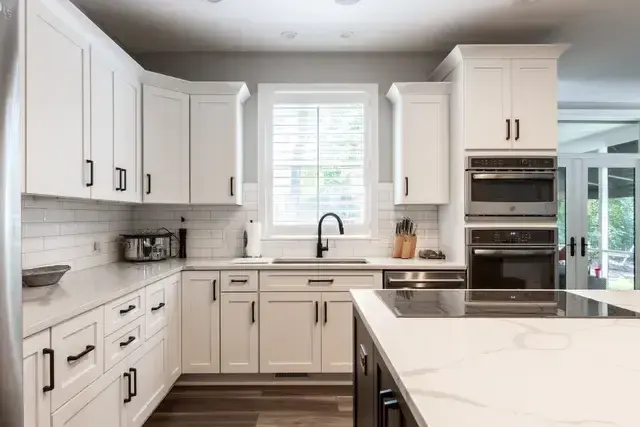
Photographs from real cellular shades jobs completed by our crew in Indianapolis and surrounding areas.
What Cellular Shades Includes
Every Indianapolis job is documented item by item. Here is what the crew covers.
Room-by-room walk to decide where the energy case is real and where it isn't
Three widths and three heights per opening with a diagonal square check
Mounting depth measured so the headrail sits fully inside the opening where an inside mount is wanted
Single cell or double cell specified per room rather than picked once for the whole house
Cell size chosen against the opening, smaller cells on short windows so the stack stays in proportion
Light filtering, room darkening and blackout fabrics separated in writing before anything is ordered
Top-down bottom-up specified where street privacy and daylight both matter at the same window
Cordless lift specified as the default in bedrooms, nurseries and stairwells
Continuous cord loop with a tensioner used only where weight or height makes cordless impractical
Products specified to conform to ANSI/WCMA A100.1-2022 for cord access
Winter condensation risk on tight inside mounts explained at the measure
Headrail clearance from the glass checked so the shade isn't sealed against a cold surface
Light gap per side disclosed for inside mounts and written on the paperwork
Vertical cellular units drawn where the opening is a slider rather than a window
Specialty shapes measured with a template where an opening is arched or angled
Wide spans reviewed for headrail deflection and split into two units where that's the right call
Bottom rail leveling and full travel tested at every unit on install day
Old product removed, brackets pulled and the wall left ready for the new mount
What Cellular Shades Cost in Indianapolis
National category numbers put stock shades around $60 to $600 per window and custom-fabricated shades around $250 to $2,600 per window. They're national ranges, published for the category, and they aren't a quote for any address in Indianapolis. Cellular sits across a wide part of that band because the construction varies so much. A single cell light filtering shade on a small opening is near the bottom. A double cell blackout shade with top-down bottom-up on a tall window is near the top, and it should be, since you're paying for two lift systems and a heavier fabric. Size, cell count, fabric opacity and lift type are the four levers. Indianapolis Window Treatments prices from measured openings in Marion County, not from a per-window average.
How Cellular Shades Differ by Product
Every product in this trade behaves differently in a room. Here is what that means for this work.
Single cell, 3/8 inch: The small cell keeps the stack tight at the top of the window, which matters on short openings and transoms. Specify it where you want the shade nearly gone when it's raised and the room isn't an energy problem.
Single cell, 9/16 inch: The everyday size. It gives you real cell depth without a heavy stack, and it covers most bedrooms, living rooms and offices. This is the default we start from unless a room argues for something else.
Double cell, 3/8 inch: Two rows of cells means two pockets of trapped air across the same opening. Choose it on the elevations that get hit hardest, which around here usually means the north wall in January and the west wall in July.
Double cell, 3/4 inch: The deepest construction we normally hang. It stacks taller and costs more, so we reserve it for tall windows on hard elevations where the energy argument does the work of justifying it.
Light filtering fabric: Daylight comes through diffused and the room stays bright without direct glare. It's the right call in kitchens, living rooms and any space where you want softness rather than darkness.
Room darkening fabric: A denser fabric, sometimes with a liner inside the cell, that cuts most of the light through the face. Bedrooms are the obvious use. Understand that an inside mount still passes light at the edges.
Blackout fabric: The heaviest option, with a light-blocking liner in the cell. Pair it with an outside mount or side tracks if the goal is a genuinely dark room rather than a dim one. On its own it darkens, it doesn't seal.
Top-down bottom-up: Two rails on independent controls, so you can drop the top for daylight while the bottom stays up for privacy. It earns its cost in bathrooms and in any room facing a sidewalk or a close neighbor.
Cordless lift: No lift cord anywhere on the shade. It's what we put in kids' rooms by default, and it's the cleanest thing to operate on a shade you touch every day. Wide units want a hand at each end of the rail.
Vertical cellular: The same honeycomb fabric running on a track for a patio slider, stacking to one side. It gives a sliding opening the insulating construction that a vertical blind can't, and it looks like fabric rather than hardware.
See What Each Fabric Does To The Light
Pick a fabric below and the window updates. It's a drawing rather than a photograph, so read it as a rough guide to what each family does in a Indianapolis room, and to what it doesn't do.
Openness factor is a measured fabric spec, so you can compare it line to line. The category names are not measured. One maker's room darkening can behave like another maker's light filtering, which is why the sample books come to the measure and get opened in the room they're going in, at the hour that room has the problem.
Cellular Shades FAQ
Questions we hear most often from Indianapolis homeowners considering cellular shades.
Cellular Shades Across Indianapolis
We measure and install in every one of these Indianapolis neighborhoods. Each has its own page with the build eras, window conditions and mounting notes for that section.
- Cellular Shades in Irvington
- Cellular Shades in Fountain Square
- Cellular Shades in Herron
- Cellular Shades in Lockerbie Square
- Cellular Shades in Chatham Arch
- Cellular Shades in Old Northside
- Cellular Shades in Woodruff Place
- Cellular Shades in Meridian
- Cellular Shades in Broad Ripple
- Cellular Shades in Butler
- Cellular Shades in Golden Hill
- Cellular Shades in Forest Hills
- Cellular Shades in SoBro
- Cellular Shades in Warfleigh
- Cellular Shades in Crows Nest
- Cellular Shades in Williams Creek
- Cellular Shades in Rocky Ripple
- Cellular Shades in Traders Point
- Cellular Shades in Geist
- Cellular Shades in Bates
- Cellular Shades in Fall Creek Place
- Cellular Shades in Nora
- Cellular Shades in Castleton
- Cellular Shades in Glendale
- Cellular Shades in Devonshire
- Cellular Shades in Speedway
- Cellular Shades in Meridian Hills
- Cellular Shades in Cottage Home
- Cellular Shades in Garfield Park
Other Window Treatment Services in Indianapolis
Indianapolis Window Treatments handles the full scope of window treatment work. Explore our other services below.
Schedule Your Free In-Home Measure in Indianapolis
Reach Us Directly
Our team prioritizes scheduled measures and service calls, and books in-home measures during business hours.
Ready to Book Your Measure?
Call us to set up an in-home measure, or to ask about a treatment that has stopped working. We will talk it through on the phone first.