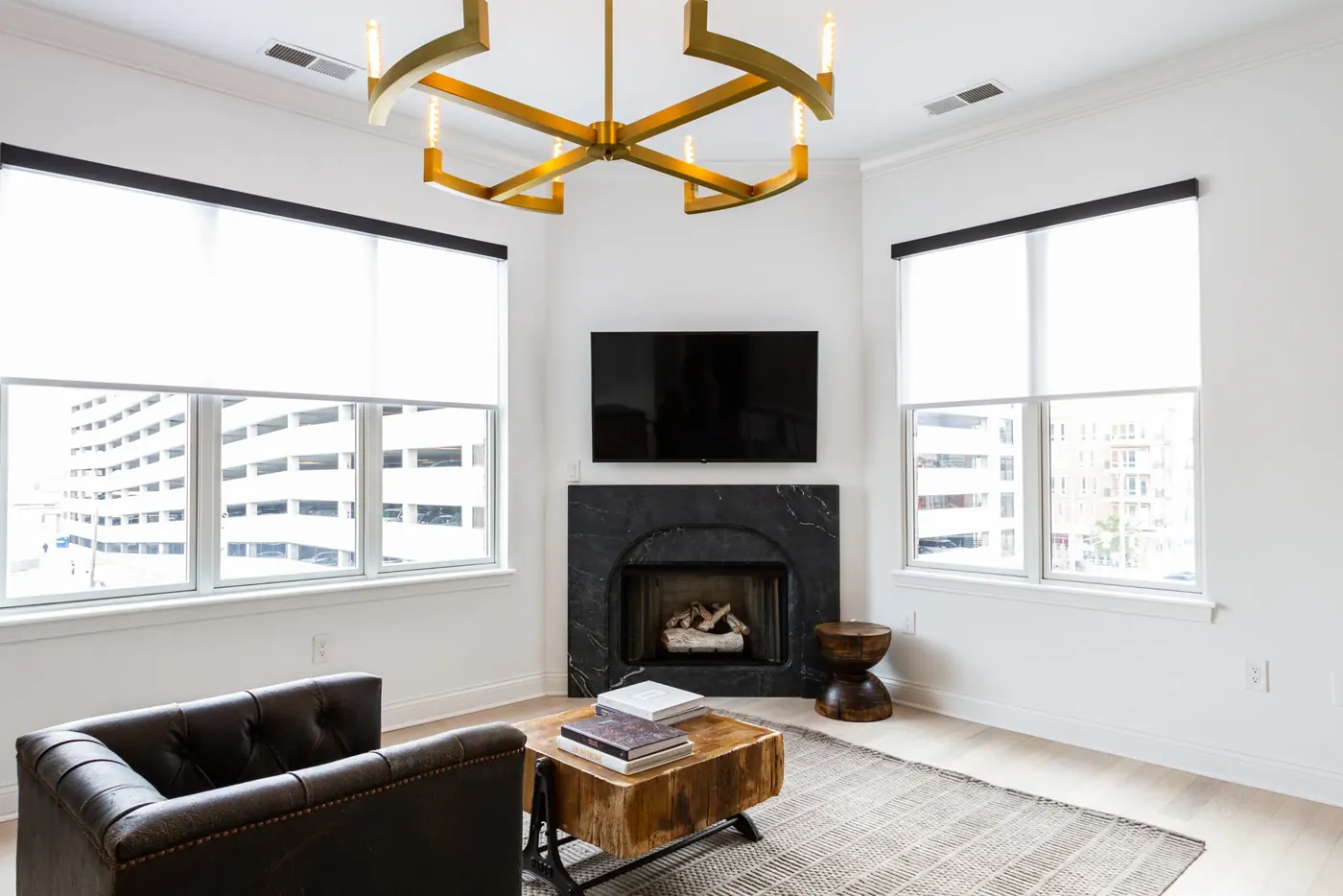
Solar Shades

Solar Shades in Indianapolis, IN

Cut the glare, keep the view, pick the number

Call (317) 854-7158Get Free Quote
Quick Answer

People considering this product usually want to know how it compares to the alternatives. The answers below make those comparisons directly, including the cases where a different product is the better call.

  • Service: Solar Shades for Indianapolis homeowners
  • Service area: Indianapolis, IN and surrounding areas
  • The measure gets scheduled quickly. The build does not, because your fabric or shutter panel is cut to your numbers after you order. Two to five weeks is normal. Service calls skip that step entirely.
  • Insured and bonded
  • Serving Indianapolis, IN since 2008
Solar Shades Services

Expert Solar Shades for Indianapolis Homes

A solar shade is a screen fabric with a stated openness factor, and that number is the entire specification. 1 percent blocks the most and shows the least view. 10 percent keeps the view almost intact and cuts far less glare. 3 and 5 percent sit between. Everything else about the product, the color, the hardware, the mount, matters less than getting that one number right for the elevation it's going on.

Indianapolis makes the choice harder than a suburb does because the city has at least five street geometries running at once. On the cardinal grid across the near north and near south sides, one side of every north south street takes the low afternoon sun straight on and wants a low openness. On the curvilinear plats in Irvington, Golden Hill and Forest Hills, two neighbors face different directions and no rule holds. At Geist, Warfleigh and Rocky Ripple the glass looks at open water.

The honest limitation on interior solar shades is heat. They cut glare well, they cut the radiant load on your floors and furniture, and they preserve a view that a blackout fabric destroys. But once sunlight has passed through the glass the energy is already inside the room, and an interior fabric can only re radiate it. If the complaint is that the room is unbearable from four o'clock in July, exterior shades and awnings are what actually address that.

When to Call

Signs You Need Solar Shades

If you notice any of these in your Indianapolis home, it is worth booking a measure. None of it is urgent, and none of it fixes itself either.

The room is unusable from mid afternoon through the summer

Screen glare makes a home office unworkable on the west side

You want to keep the view rather than block it

Floors and furniture are fading on one particular elevation

Water reflection off the reservoir doubles the afternoon glare

Existing shades cut the light but kill the view entirely

A south facing room overheats even with blinds closed

You need daytime privacy without losing the outside

Our Process

How Indianapolis Window Treatments Handles Solar Shades

Every job follows the same six-step process. Transparent, thorough, and done right the first time.

1

Establish the actual exposure

We stand in the room and work out which way it faces, what shades it now and what will shade it in ten years. On the cardinal grid that's a simple answer. On the curvilinear plats it has to be checked house by house, and on a lot with mature canopy in front the load can be half what the compass suggests. That reading sets the openness range before anything else.

2

Show openness against your view

We bring 1, 3, 5 and 10 percent sample cards and hold them against your own window rather than describing them. The difference between 3 and 5 percent is obvious in the room and impossible to convey in words. Where the view is the reason you bought the house, that comparison often moves people up the scale and toward accepting more glare.

3

Choose fabric color deliberately

Color changes behavior more than people expect. A dark fabric preserves view and cuts glare better because it absorbs rather than scatters light, at the cost of absorbing more heat itself. A light fabric reflects more heat outward but scatters light and gives a hazier view. On a west elevation with a view worth keeping we usually land on a darker fabric at a lower openness.

4

Measure and check the gap

Three widths, three heights and a diagonal per opening, then mounting depth at the stop against the chosen line. On a solar shade the light gap matters differently: a bright strip at the edge of a dark screen fabric is more noticeable than the same gap on a light filtering fabric, because the eye compares it to the darkened field beside it.

5

Decide interior or exterior

If the problem is glare, an interior shade solves it. If the problem is a hot room, we say plainly that the energy is already through the glass and offer exterior shades or a retractable awning instead. In an IHPC district that changes the paperwork, because an exterior product is an exterior architectural feature and needs a certificate of appropriateness.

6

Install and set travel

Brackets level to each other, the shade run through several full cycles to confirm the fabric tracks straight, and the hembar checked parallel to the sill. On a motorized job upper and lower travel limits get set and re verified. We leave the shade at the height you actually want it for daily use rather than fully raised.

Real Project Photos

Solar Shades in Indianapolis

Photographs from real solar shades jobs completed by our crew in Indianapolis and surrounding areas.

Custom shades measured and installed in Indianapolis
Scope of Work

What Solar Shades Includes

Every Indianapolis job is documented item by item. Here is what the crew covers.

Every elevation walked and written down, because a west window and a north window don't get the same openness

Openness factor chosen per opening, 1, 3, 5 or 10 percent, rather than picked once for a whole house

Samples held against the actual glare at the hour that room is actually a problem

Fabric color decided alongside openness, since dark yarns read the view and light yarns bounce more light back at you

The view you'd be giving up shown to you through a real sample before the order, not described in words

Night behavior explained plainly, because with interior lights on the shade works in the other direction

Heat expectations set honestly, including what an interior product can't do once sun is already through the glass

Fade language kept accurate, since NFRC puts UV at roughly 40 to 60 percent of fading damage

Three widths and three heights per opening plus a corner-to-corner square check

Mounting depth measured for the tube, the brackets and a cassette if the roll is being hidden

Roll direction set, with reverse roll used where the fabric needs to stand off the glass

Light gap per side disclosed, and flagged as larger on shades over 120 inches or past a 4:1 ratio

Wide sun-facing spans reviewed for coupling so two tubes track together across one opening

Chain side chosen per window, with cordless and motorized offered where a chain doesn't suit

Every continuous cord loop unit gets its tensioner anchored rather than left hanging as a loop

Layering discussed where one fabric can't handle daytime glare and nighttime privacy at the same window

Hembar matched to the fabric so an open weave hangs straight instead of waving at the bottom

Each shade run full travel on install day and checked for centered tracking before sign-off

Pricing

What Solar Shades Cost in Indianapolis

National category figures put stock shades near $60 to $600 a window and custom-fabricated shades roughly $250 to $2,600. Those are published national ranges rather than a quote for a house in Indianapolis. Solar shades sit in the middle of that band and the openness number itself barely moves the price. What moves it is the weave and the yarn: a basic vinyl-coated polyester screen costs less than a fine-yarn or a metalized-backed fabric, and width drives everything as usual. Hiding the roll in a cassette adds. Motorization is priced separately, nationally $300 to $1,500 per window installed. Indianapolis Window Treatments works from measured openings and real elevations in Marion County, never from an average.

By Product

How Solar Shades Differ by Product

Every product in this trade behaves differently in a room. Here is what that means for this work.

1 percent openness: The tightest weave we normally hang. It cuts the most glare and gives up the most view, so the outside reads as a soft haze rather than a scene. Specify it on hard west glass where the afternoon is genuinely unusable.

3 percent openness: Strong glare control with some view left. It's the choice for a home office facing west or south where screens have to be readable through the afternoon, and it's the one people are usually happiest with on the worst window in the house.

5 percent openness: The everyday middle. It keeps a usable view of a yard or a street while taking the hard edge off direct sun. This is the default we start from on most openings before a specific elevation argues us up or down.

10 percent openness: The most open weave, which means the best view out and the least glare control. It suits a north or east window where you want the fabric mostly for daytime privacy and some sun softening rather than for fighting an afternoon.

Dark fabric colors: Charcoal and bronze absorb light rather than scattering it, so the weave holes read as small clear windows and the view through is noticeably better. The tradeoff is that a dark fabric holds more heat at the glass line.

Light fabric colors: White and beige reflect more solar energy back out and keep the fabric cooler, but they scatter light across the weave, which washes out the view and can produce its own soft glare. It's a real choice, not a color preference.

Reverse roll on solar fabric: Rolling the fabric off the front of the tube stands the screen off the glass by an inch or so, which keeps it clear of hardware and lets a little air move in the space behind it. Useful on hot southern exposures.

Cassette headbox: A closed box hiding the tube, which matters more on solar than on other fabrics because an open roll of screen fabric looks like exactly what it is. It also keeps dust out of the weave sitting on top of the roll.

Motorized with a sun sensor: A motor plus a sensor that lowers the shade when the sun actually hits that elevation, or an astronomical timer that runs to sunrise and sunset. It's the version of this product that works when you aren't home to run it.

Layered with a room darkening shade: A second tube on a dual bracket carrying an opaque fabric behind or in front of the screen. The solar shade handles the afternoon, the second shade handles the night, and neither one gets asked to do a job it can't.

Light Control

See What Each Fabric Does To The Light

Pick a fabric below and the window updates. It's a drawing rather than a photograph, so read it as a rough guide to what each family does in a Indianapolis room, and to what it doesn't do.

Fabric type

Sheer, 10 percent openness

Ten percent of the weave is open, so you keep the view and most of the daylight. Glare drops a little. After dark, once your lamps are on, someone outside can read shapes through it, which is why this belongs on a view window rather than a bedroom.

Openness factor is printed on the fabric card, so you can compare one line against another before you order anything.

Keeps the viewNot private after dark

Solar, 5 percent openness

The usual pick for a west window or a covered porch. You can still read the yard through it, glare comes down noticeably, and the fabric intercepts a good share of the sun before it reaches you at four in the afternoon.

It also cuts the UV landing on floors and furniture. NFRC puts UV at roughly 40 to 60 percent of fading damage, so this slows fading rather than stopping it.

View and glare controlSlows fading

Solar, 3 percent openness

A tighter weave. The room goes dimmer and the view drops back to an outline. Choose it where the sun is the problem and the view is second, which around here usually means a west wall in July. That's a common call on this side of Indianapolis.

Openness affects how much you see out, not how private you are. A 3 percent fabric still shows silhouettes at night.

View becomes an outlineStrong glare control

Solar, 1 percent openness

Close to a solid fabric with a little view left in it. This is the strongest glare control in the solar family.

The trade is that it darkens the room on a gray January day too. Indianapolis averages a January high near 36F and the light is flat, so think about how the room reads in both seasons before you commit.

Darkest solar optionDim on gray days

Light filtering

No view through it. Daylight comes through the face diffused, so the room stays bright without a hot spot across the television or the kitchen island. This is the default for living spaces.

It isn't private in reverse at night. With the lamps on and the sun down, silhouettes still show.

No view through itBright without the glare

Room darkening

A denser fabric, usually with a liner behind it. Most of the light coming through the face is gone.

Light still arrives around the edges on an inside mount, so a room darkening shade gives you a dim room rather than a dark one. If someone in the house sleeps during the day, say so at the measure and we'll scope it differently.

Dim, not darkEdges stay bright

Blackout

The fabric itself passes essentially no light. What you'll still see is the perimeter. Lutron publishes an inside-mount light gap of about 3/4 inch per side on its Roller 20 and 64 shades, along with a standard factory deduction of 1/16 inch per side, and shades over 120 inches tall or past a 4:1 height-to-width ratio get larger gaps than that.

So if you need a genuinely dark bedroom, that gap has to be dealt with on purpose, either with side channels or by going outside mount. We tell you which one your opening can carry while we're still standing in the room.

Dark facePerimeter needs a plan

Openness factor is a measured fabric spec, so you can compare it line to line. The category names are not measured. One maker's room darkening can behave like another maker's light filtering, which is why the sample books come to the measure and get opened in the room they're going in, at the hour that room has the problem.

Common Questions

Solar Shades FAQ

Questions we hear most often from Indianapolis homeowners considering solar shades.

It depends on the elevation and on how much you care about the view, and those pull in opposite directions. As a starting point, 1 to 3 percent for a west or south west room where glare is the reason you called, 5 percent as a general purpose choice that keeps a usable view, and 10 percent where the view matters more than the glare and you're mostly after fade reduction. What we won't do is pick it from a phone call. Held against your own window the difference between two adjacent numbers is obvious, and people frequently choose differently than they expected to.
No, and this catches people out every year. A screen fabric works by being more transparent from the dark side toward the light side. During the day the outside is bright and the room is dark, so you see out and passers by don't see in. After dark that reverses completely: your lamps are on, the street is dark, and the room is visible from outside through the same fabric. On a street facing room the standard answer is a dual arrangement, either a zebra shade or a solar shade with a second room darkening shade behind it.
It will slow the fading. Nothing stops it. The National Fenestration Rating Council attributes roughly 40 to 60 percent of fading damage to ultraviolet, which leaves visible light, heat, humidity, fabric age and dye chemistry driving the rest, and no shade removes those. A low openness solar fabric on the worst elevation makes a real difference to how fast a rug or a floor ages, and it's a legitimate reason to buy. Anybody promising a shade will halt fading altogether is describing something that doesn't exist.
Because it is. On a solar shade the room side face takes reflected and transmitted light while the street side takes the direct beam, and they age at different rates and often in different directions. Two shades in the same room on different elevations will also diverge over several years, which is most visible when you're looking down a wall of them. It's normal behavior for the material rather than a fault. If uniform appearance across a long run matters to you, that's an argument for a lower openness and a darker fabric from the start.
Usually not, and we'd rather sell you fewer. A north room in Indianapolis gets diffuse light and very little direct beam, so there's minimal glare to cut and minimal fade load. Putting a screen fabric on it just makes the room darker and hazier for no gain. Where north facing solar shades do make sense is consistency across a long elevation where you're looking at several windows at once, or where a north window faces something reflective. Otherwise we'd put the budget on the west side and leave north alone.
Yes, and it's one of the better applications, because the upper glass is usually the source of the glare and nobody wants a heavy treatment up there. Two things to plan. Fabrics 120 inches and taller, or with a height to width ratio of 4 to 1 or greater, get larger light gaps than the published figures, and on a dark screen fabric those gaps read brightly. And the upper units need motorization, because a shade you can't reach is a shade you never use. The install needs lift access, which is a scheduling item.
Where the energy gets stopped. An interior shade intercepts the light after it has passed through the glass, so the heat is already in the room and the shade can only diffuse and re radiate it. An exterior shade stops the same light before it reaches the glass, which is a substantially different result on a hot afternoon. The trade offs are that exterior product costs more, is exposed to weather and wind, and in one of the 17 IHPC districts counts as an exterior architectural feature requiring a certificate of appropriateness.
They work, and the specification changes. A lot facing the Geist reservoir, the White River at Warfleigh or the canal at Rocky Ripple gets a second dose of light reflected off the water surface, arriving at a different angle from the direct beam and often at a time of day when a high sun wouldn't be a problem. That reflected component argues for a lower openness than the compass direction alone would suggest. It also means glare can arrive on an elevation that faces away from the sun entirely, which surprises people.
It's the percentage of the fabric that's open space between the yarns. A 5 percent fabric is 95 percent solid and 5 percent holes. That single number sets the whole tradeoff you're buying, because the holes are what let you see out and the solid part is what cuts the glare. Lower openness means more glare control and less view. Higher openness means more view and less glare control. There's no fabric that gives you both, and anybody who tells you otherwise is selling rather than measuring.
Usually lower than people expect. A west elevation in Indianapolis takes direct low sun through the worst part of a summer afternoon, and a 10 percent fabric there will not cut it. We'd normally be at 3 percent, sometimes 1 percent if the room is a home office where screens have to stay readable. Understand what that costs you: at 3 percent the view out is real but muted, and at 1 percent the outside becomes a soft haze rather than a scene.
Darker, by a clear margin, and it surprises people. A charcoal or bronze yarn absorbs light instead of scattering it, so each opening in the weave behaves like a small clear window and the view through stays crisp. A white or beige fabric scatters light across the weave and washes the view out, sometimes producing a soft glare of its own. The counterweight is heat: a light fabric reflects more solar energy back out through the glass, while a dark fabric holds more at the window.
Yes, and this is the disclosure that saves arguments later. A solar shade works by having more light on one side than the other. During the day it's brighter outside, so you see out and nobody sees in. After dark with your lamps on, that reverses exactly: you see your own reflection and somebody on the sidewalk sees into the room. It's physics, not a fabric flaw. If a room needs nighttime privacy, you need a second fabric on a dual bracket.
They help at the window and they do far less than the marketing suggests. Here's the honest mechanism: by the time an interior shade is doing anything, the sun's energy has already come through the glass and turned into heat inside the room. A screen fabric absorbs and re-radiates some of that, and a light-colored fabric reflects a share back out, so you feel a real difference standing near that window. An exterior product intercepts sun before it gets in, which is a fundamentally better position. That's the difference.
It slows it. NFRC attributes roughly 40 to 60 percent of fading damage to ultraviolet light, with the rest coming from visible light and heat, so no interior fabric ends the problem. Solar screens block a substantial share of UV and cut visible light too, so a hardwood floor or a leather chair in front of south glass ages noticeably slower behind one. What we won't tell you is that a solar shade protects anything completely, because it doesn't, and the fabric only works while it's down.
Reasonably, and it depends on the openness. At 1 or 3 percent, someone standing outside in daylight sees a screen rather than a room, and that's genuine daytime privacy. At 10 percent, a person close to the glass can make out shapes and movement inside. So openness is doing double duty here: it's your glare setting and your daytime privacy setting at once. What it never provides is privacy after dark once the lights are on inside.
Because you'd be paying for a view you then throw away. The whole reason to buy a solar shade instead of a room darkening roller is that you want to keep looking outside while the glare goes away. At 1 percent the outside is a haze, which is right on a brutal west window and wrong on a north window where there was never much glare to fight. Buying openness room by room is how this product earns its price, and it's why we walk elevations before quoting.
Mechanically nothing. A solar shade is a roller shade, same tube, same brackets, same clutch or motor. The difference is entirely the fabric: an open-weave screen designed around a published openness percentage instead of a fabric designed around opacity and appearance. So the decision tree is different. On a roller you're choosing how much light to block. On a solar shade you're choosing how much view to keep while cutting glare, which is a genuinely different question.
They do, and a slider is often the best case for one, since patio glass throws afternoon light across an entire room and you don't want to lose the view of the yard. The things to plan are width and clearance. A wide opening may want two coupled tubes running on one line so they track together, and the hembar has to clear the door handle and the track at the bottom. Reverse roll helps where the fabric would otherwise foul hardware in the opening.
Usually, and the fix is about angle as much as fabric. Screen glare comes from a bright source reflecting off the display, so what matters is cutting the intensity of the light behind and beside you. A 3 percent fabric on the offending window normally does it, and 1 percent handles the worst west exposures. Where it doesn't work is when the sun is low enough to come in under the hembar, which is why we sometimes extend an outside mount lower rather than going tighter on the weave.
Yes, on a dual bracket, and it's the honest answer rather than a way to sell two shades. One bracket carries two tubes at the same opening. The screen handles the afternoon while keeping your view, and an opaque fabric drops at night for real privacy or for sleeping. Trying to get both from a single fabric always disappoints in one direction. The pair needs mounting depth, so we measure for it at the start instead of adding a second shade later.
On a bank of sun-facing windows, it's the version that actually gets used. A sun sensor lowers the shade when that elevation takes sun rather than when you remember, and an astronomical timer runs to sunrise and sunset through the year. Installed motorization sits nationally at $300 to $1,500 per window. Budget for batteries as an ongoing item: Hunter Douglas states PowerView battery life is about one year, and that's the cost people are least often told about before they sign.
Better than most fabrics, since these are engineered for exactly that. Vinyl-coated polyester screens are the workhorse and they hold color and tension for years on a hard exposure. What ages first is usually the edge that sits exposed on the outside of the roll rather than the body of the fabric, and very fine yarn fabrics are less forgiving than coarser ones. Keeping the shade down through the hottest hours protects the room, which is the whole point of owning it.
Related Services

Other Window Treatment Services in Indianapolis

Indianapolis Window Treatments handles the full scope of window treatment work. Explore our other services below.

Free In-Home Measure

Schedule Your Free In-Home Measure in Indianapolis

Contact Information

Reach Us Directly

Our team prioritizes scheduled measures and service calls, and books in-home measures during business hours.

Office
1417 Commerce Avenue, Indianapolis, IN 46201
Hours
Mon-Fri 8a-6p
Service Area
Indianapolis, IN and Surrounding Areas

Ready to Book Your Measure?

Call us to set up an in-home measure, or to ask about a treatment that has stopped working. We will talk it through on the phone first.

Service area

Serving Indianapolis and the surrounding area

Call NowGet Quote