Do Your Indianapolis Windows Need Inside Mount or Outside Mount Blinds?
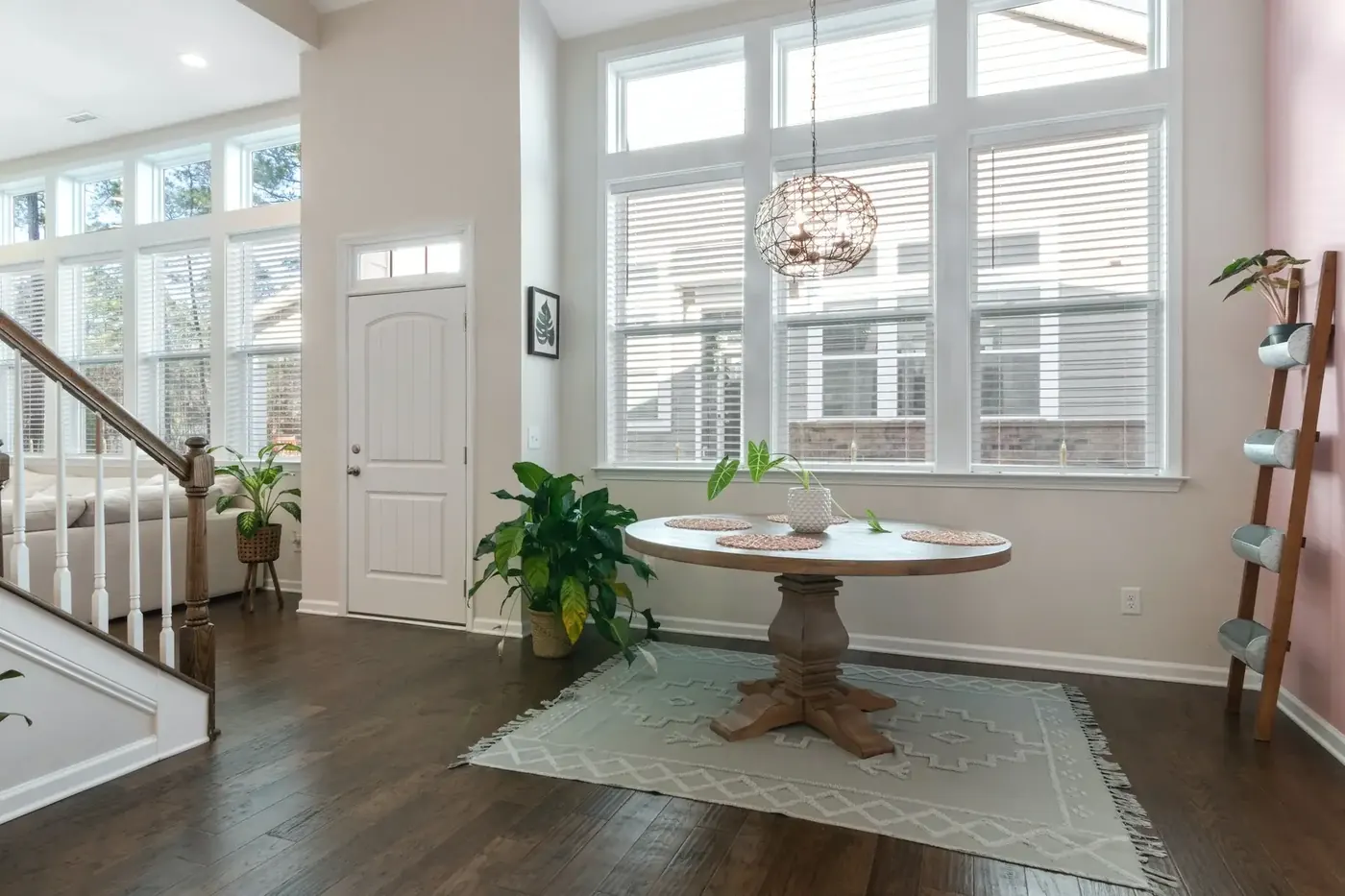
Walk into ten homes in Indianapolis and you'll find windows that look nearly identical from across the room but behave completely differently once you get a tape measure on them. Frame depth, trim thickness, and what's hiding inside the opening all decide whether a blind can sit inside the frame or has to ride on the wall in front of it.
Inside Mount and Outside Mount, Defined
Inside mount means the blind or shade sits inside the window frame itself, tucked into the opening so the headrail is basically flush with the trim. From across the room it looks built in, like the window was designed around it. Outside mount means the hardware attaches to the wall or trim in front of the opening, covering the frame rather than fitting inside it.
Neither one is the correct choice in some general sense. They're just two different ways of solving the same problem, and which one works on a given window in Indianapolis comes down to measurements more than preference. A window with 2.5 inches of clear depth and nothing in the way can usually take either mount. A window with a crank handle intruding into that space or a sill that slopes toward the glass often can't take inside mount at all.
The visual difference matters too. Inside mount shows a bit of the frame around the edges of the shade, which a lot of people like because it reads as more architectural. Outside mount hides the frame entirely and can make a window look larger, since the headrail extends past the actual glass. Once you've seen both on a real house instead of a showroom display, the difference is obvious.
Why Homeowners Choose Inside Mount
Living rooms and dining rooms lean inside mount more often than not, mostly because these are the rooms where trim tends to be nicest and most worth showing. A built-in look reads as more finished, and inside mount delivers that by keeping the frame fully visible around the shade.
Kitchens are another strong candidate, specifically because of clearance. A window over a sink often has a faucet, a soap dispenser, or a windowsill full of plants right up against the glass, and outside mount hardware needs room to hang that these spaces frequently don't have. Inside mount solves that by staying contained within the opening itself.
The tradeoff shows up as a light gap along the sides, usually small but sometimes noticeable depending on the product and the room's lighting. In a kitchen or living room that gap rarely matters. It's worth flagging, though, before you assume every room should get the same treatment.
Mixing Mounts and Getting a Consistent Look Room to Room
One thing that surprises people: your whole house doesn't need to match. Plenty of Indianapolis homes have deep original frames in some rooms and shallower frames in others, and ending up with inside mount in one room and outside mount in another is completely normal, not a sign anything went wrong.
Where consistency actually matters is within sightlines. A kitchen open to a living room will look better if the color and headrail style carry through even if the mount underneath differs, since color and shape catch the eye long before depth does. Within one single room, though, keep the mount consistent across the windows in it. A row of three matching windows on one wall, mounted two different ways, reads as a mistake even when each individual choice was technically correct for that window.
If one window in a row genuinely can't take the same mount as its neighbors, that's worth talking through before ordering. Sometimes a small adjustment, like a slightly different headrail style on just that window, keeps the row looking intentional instead of accidental.
Inside or outside, the right mount depends on details a photo can't show you. A free in-home measure covers the depth check, the trim question, and the obstruction check in one visit, so you're not making a permanent decision off a guess.
Depth, Obstructions, and Other Mounting Realities
The number that actually settles most inside versus outside arguments is depth, not opinion. Faux wood blinds generally need 2 to 2.5 inches of clear space. Cellular shades can sometimes fit into slightly less. Shutters are the pickiest, usually wanting 3 to 3.5 inches because the panel frame itself takes up real room.
Here's where the idea of easy DIY measuring falls apart a little: a tape measure alone won't catch everything. A crank handle sticking into the frame, a sill sloping toward the glass, trim that's been added since the original window went in, all of these can rule out inside mount on a window that measures deep enough at first glance.
None of these problems are rare. They show up often enough that a professional measure exists specifically to catch them before an order goes in, rather than after a custom product arrives and doesn't fit the way it was supposed to.
Why Homeowners Choose Outside Mount
Ask yourself first whether the frame even has the depth for inside mount. If it doesn't, or if a crank handle or lock is sitting where the hardware would need to go, the decision's already made for you and outside mount is the answer regardless of preference.
Beyond that forced case, ask how much light control actually matters in that room. A bedroom that needs to go properly dark benefits from outside mount's ability to fully overlap the frame and close the gaps that inside mount leaves open. A home office or a dining room usually doesn't need that same level of light blocking, which is why outside mount shows up more often in bedrooms than anywhere else in a typical Indianapolis house.
Last question: is the frame square? Older homes especially can settle unevenly over the decades, and an out-of-square opening is much easier to work around with outside mount, since the header mounts level above the window regardless of what the frame underneath is doing.
Frequently Asked Questions
How much depth do I need for an inside mount?
Most blinds and cellular shades need at least 2 inches of clear depth, and shutters usually want closer to 3. If your frame is shallower than that, or something like a crank handle or a sloped sill is in the way, outside mount is usually the better call.
Does outside mount block more light than inside mount?
Yes, generally. Outside mount hardware overlaps the frame on all sides, so it closes the light gaps you'd otherwise see around an inside mount blind. If a dark bedroom matters to you, that overlap is doing real work.
Can I switch from inside mount to outside mount later?
Usually, yes, since outside mount hardware attaches to the wall or trim rather than inside the frame. Going the other direction is harder, since it depends on depth that either exists or doesn't.
 How to Choose Drapery Fabric and Color in Indianapolis
 Window Treatments That Survive Tenant Turnover in Indianapolis
 What Roller and Solar Shades Cost in Indianapolis Homes Today