Battery or Hardwired: Powering Smart Shades in Indianapolis
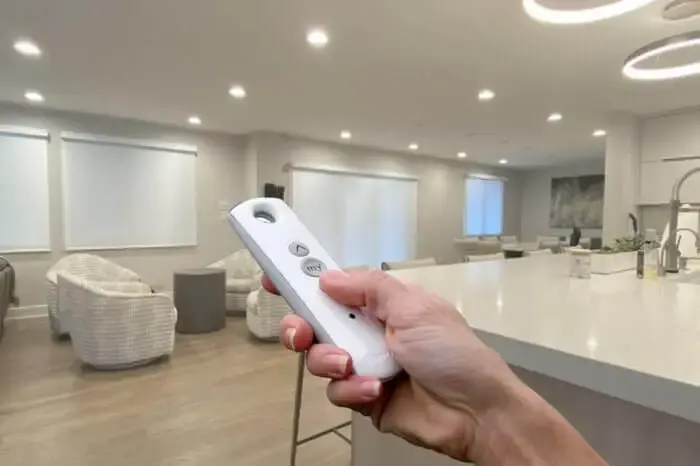
We get called out to plenty of Indianapolis homes where a smart shade is not doing what it is supposed to, and in nearly every case the fix has nothing to do with the shade itself. It is worth knowing what actually tends to go wrong before it happens to yours.
How Motorized Shades Actually Work
Before ordering, ask exactly how the motor is powered. Most are either a rechargeable battery pack or hardwired to line voltage, and a few budget kits still use disposable batteries. That answer changes the install entirely, including whether an electrician needs to be involved, and it's not always obvious from a product photo or a showroom display.
Ask what's needed to get app and voice control, specifically, not just "is it smart." Some motors need a proprietary hub sold separately. Others build networking into the motor itself, no separate hub required, though that's still the less common setup as of 2008.
And ask what happens with just the remote, no hub, no app, since that's the fallback you'll be living with the moment your Wi-Fi has a bad day or the hub needs a reset. An Indianapolis installer who's actually set up more than a handful of these systems, not just sold them, should be able to answer all of that without checking a spec sheet.
Voice Control and the Hub Question
For a whole-home smart shade setup, decide on a lead ecosystem before you order anything. That choice quietly shapes which hub and which shade brands play nicely together, and retrofitting a different voice platform later is rarely as clean as planning for it up front. A few things tend to matter most in that decision:
- Alexa-based households usually have the widest range of compatible hubs to choose from.
- Google Home households should confirm the specific integration exists, not just that the hub connects to Wi-Fi.
- Apple Home households often need a hub built for that ecosystem, or a bridge, in the chain before a shade shows up as an accessory.
If your household already leans one direction, say everyone already has Apple phones and an existing Home setup, that's usually the deciding factor, more than any feature difference between the shade brands themselves.
Battery Life and Charging in the Real World
The most common "my smart shade stopped working" call turns out to be a dead battery, not a broken motor or a network problem. The shade responds slowly, then not at all, and it looks like a bigger issue than it actually is.
Cold rooms make this worse and confuse the diagnosis further. A shade that's been fine all summer can start acting sluggish once an Indianapolis winter sets in, simply because cold temperatures reduce how much power a lithium battery can deliver at once, not because anything broke.
We've also seen solar panels mounted in the wrong spot, behind a curtain or tucked under an eave where it never actually sees direct sun, which defeats the purpose entirely. A solar add-on only helps if it's getting hit by real sunlight for a meaningful part of the day.
What Actually Fails in a Smart Shade System
Fixing a connectivity issue is almost always cheaper than people expect, since it's usually a settings problem, not a hardware failure. Re-pairing a hub or replacing a battery costs little compared to what a homeowner sometimes assumes when a shade stops responding.
Where actual cost comes in is a motor that's mechanically worn out, gears that have degraded after years of heavy daily cycling. That's a real repair, sometimes a replacement, and it's the minority case rather than the norm for Indianapolis smart shade service calls.
Extending a hub's range with an additional bridge or repeater is a relatively small added cost that solves a lot of intermittent connection issues in a larger home, and it's worth budgeting for upfront rather than treating it as an afterthought.
Power Planning and Backup Control
If hardwired power is the plan, figure that out before drywall goes up, not after. Running a low-voltage line behind the wall to a discreet plug point during a remodel or new build is straightforward. Doing the same thing in a finished Indianapolis home means fishing wire through existing walls and patching drywall afterward, which is a bigger job.
For an existing home where opening walls isn't realistic, a plug-in power adapter tucked behind furniture or drapery is usually the practical compromise, giving you the reliability of hardwired power without the construction.
Whichever power source you land on, keep at least one physical remote in the house that talks directly to the motor, not through the hub. App and voice control both depend on your network staying up, and a remote that bypasses all of that still works when Wi-Fi doesn't.
Most of the smart shade problems we see trace back to planning that happened too late, power and hub placement added on as an afterthought instead of figured out ahead of time. A free in-home measure is a chance to plan all of that upfront instead.
Frequently Asked Questions
Should I choose battery or hardwired shades?
It depends on how often the shade will be used and how easy it is to run power to that window. A shade that gets adjusted constantly, or one that is hard to reach for charging, is often a better fit for hardwired. A shade used once or twice a day in an easy-to-reach spot works fine on battery.
Does a solar panel really extend battery life?
It can, but only if it gets real direct sun for a meaningful part of the day. A solar add-on mounted on a shaded or north-facing window will not help much, since it needs consistent light to actually offset what the motor is using.
What should I ask before choosing a smart home hub?
Ask exactly which voice platforms it supports by name, not just whether it is labeled smart home compatible, and ask how it performs at a distance from your router, since range varies by hub. A firmware update's track record with existing schedules and scenes is also worth asking about, since that says a lot about how stable the system actually is.
 How to Choose Drapery Fabric and Color in Indianapolis
 Window Treatments That Survive Tenant Turnover in Indianapolis
 What Roller and Solar Shades Cost in Indianapolis Homes Today